This module gives you access to:
Issue a key — or press F5
Return a key — or press F6
Report a lost key — or press F7
Report a damaged key — or press F8
Pending issue of a key — or press F9
In the top bar, select KEY MOVEMENTS and click ISSUE, or use the shortcut F5. The KEY MOVEMENTS window opens.
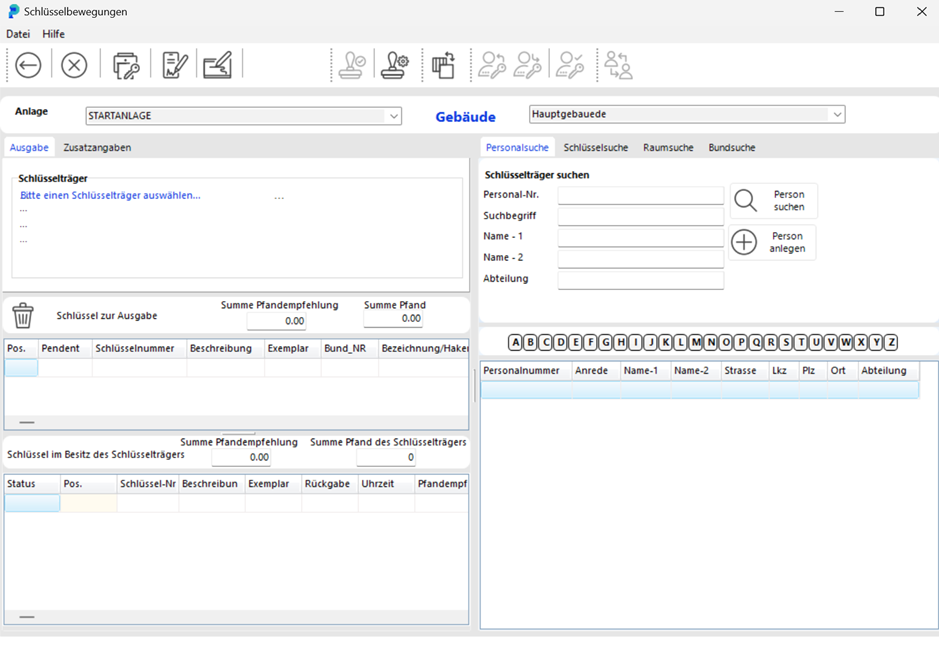
The upper section shows the installation or building you are currently in.

In the right section, click the PERSONNEL SEARCH tab to select a key recipient.

Search for the key holder by entering the first characters of their name in the Name – 1 field, then click SEARCH PERSON.
A list of all matching persons is displayed.
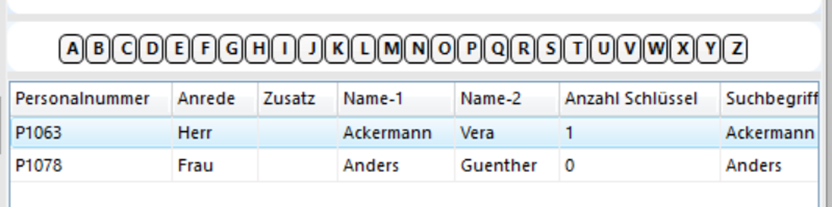
Alternatively, click the corresponding letter in the selection alphabet to list all persons whose surname begins with that letter.
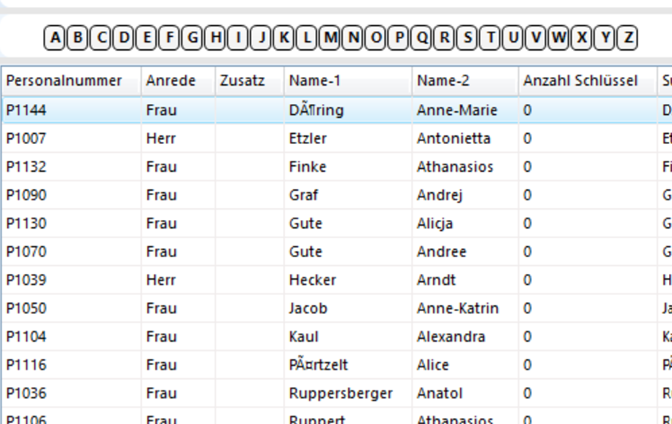
To select a person as key holder, double-click them. Their details are entered in the Key Holder field on the left.
In the KEY SEARCH tab, select the key to be issued.

Enter the first characters of the key number in the Key – No. field and press Enter to start the search.
A list of all matching keys is displayed.
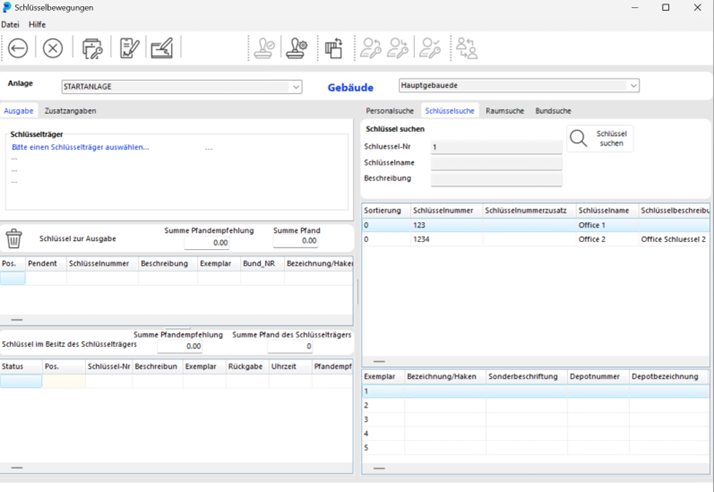
Alternatively, click the SEARCH KEYS button to display all keys.
Select the desired key by clicking it. All available copies of the selected key are shown below the key list.
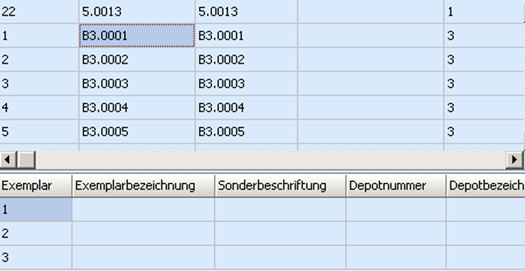
Double-click the copy to be issued to move it into the KEYS FOR ISSUE section.

Here you can also enter a desired return date and a deposit. The Keys in Possession of Key Holder field shows whether the holder currently has other keys.

Post the key issue by clicking Book (floppy disk icon).
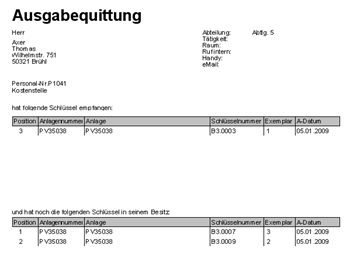
A receipt is printed automatically. If you have configured the relevant setting (see Settings), the ISSUE SETTINGS window opens, where you can preview the issue slip by clicking PREVIEW.
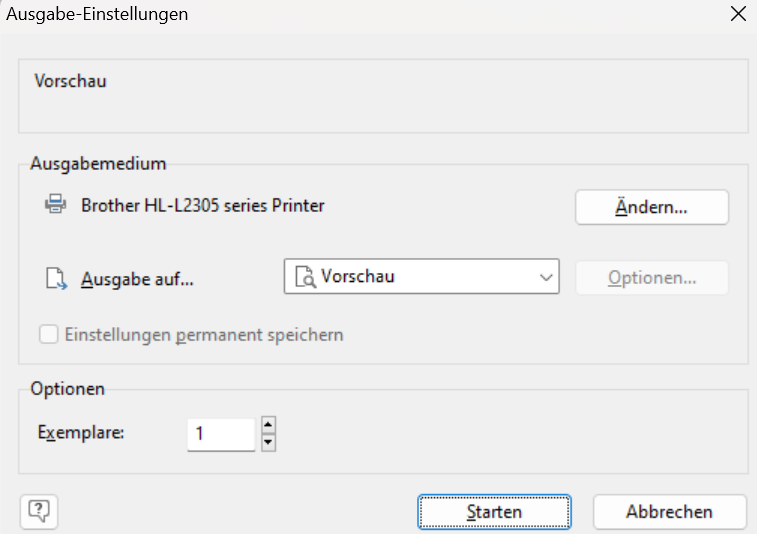
Click the printer icon to print the issue receipt.
In the top bar, select KEY MOVEMENTS and click RETURN, or use the shortcut F6. The KEY MOVEMENTS window opens.
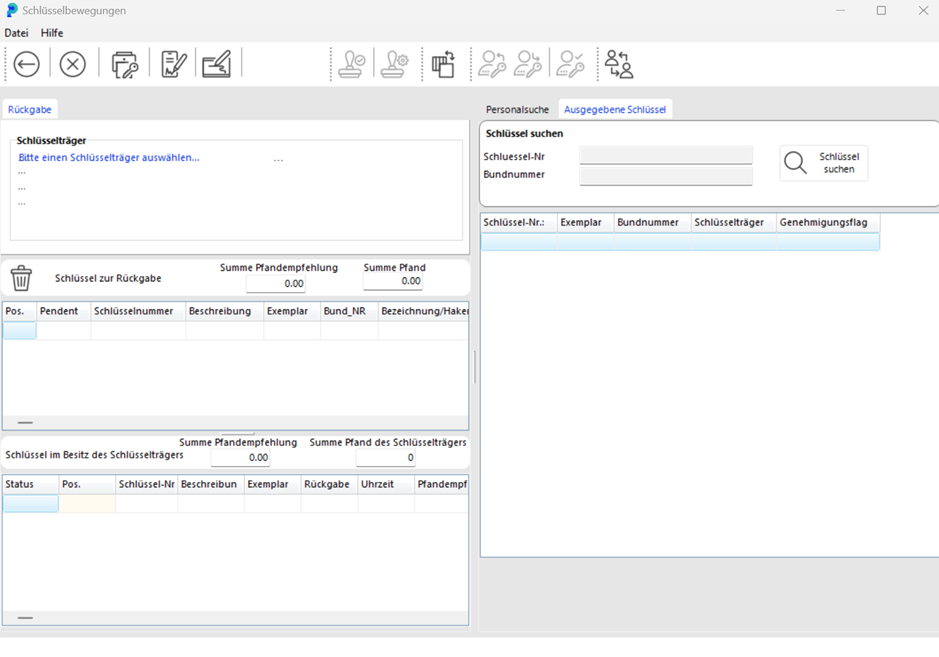
A key return can be done in two ways: by searching for the issued key, or by searching for the key holder.
ISSUED KEYS: Search for the key to get a list of all issued copies with their key holders. Click the copy to be returned, and the key holder's data is transferred to the Key Holder section.
PERSONNEL SEARCH: Search for the key holder and double-click them. Their data is transferred to the Key Holder section.
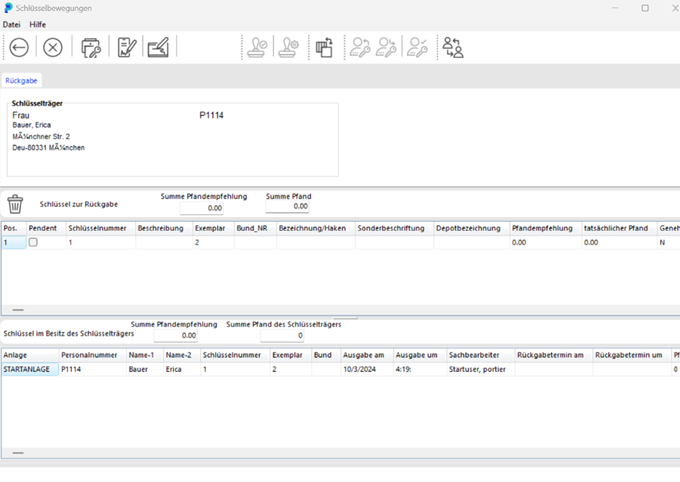
In the Keys in Possession of Key Holder list, double-click the key to be returned. The key data is transferred to the Keys for Return section.
Post the return by clicking the floppy disk icon. The further procedure is the same as for key issue.
Note: a key bundle can only be returned as a whole.
In the top bar, select KEY MOVEMENTS and click LOSS REPORT, or use the shortcut F7. The Key Movements window opens with the Loss screen. Follow exactly the same steps as for a key return. This time, the copy receives the status Loss.
In the Description of Circumstances field, you can explain how the key was lost. Note: this description is printed but not saved.
In the top bar, select KEY MOVEMENTS and click DAMAGE REPORT, or use the shortcut F8. The Key Movements window opens. Follow the same steps as for a key return. The copy receives the status DAMAGE REPORT.
In many organisations, employees and contractors are not permitted to take keys out of the building. They receive the necessary keys or key bundles each morning and return them in the evening.
The status of these keys is therefore suspended: they are neither "in storage" nor permanently issued. portier VISION refers to this as pending.
portier VISION lets you manage this conveniently: when issuing the key or key bundle, define the key holder as usual. The issue proceeds normally. portier VISION remembers this transaction for later — specifically, the issue of this copy of the key number in connection with this person.
When the key is returned in the evening, click the PENDING button in the KEY MOVEMENTS module. portier VISION will show all pending key issues for quick processing.
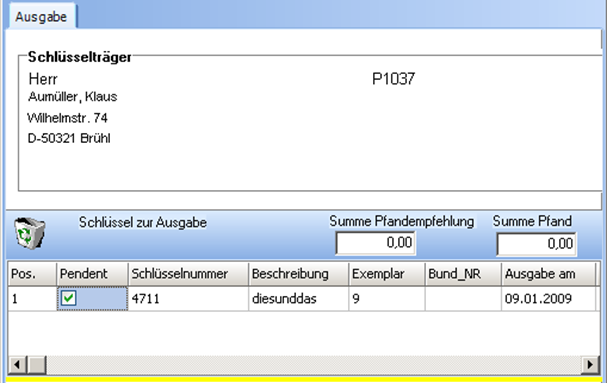
Note: only one copy can be assigned as pending at a time. To issue multiple keys to one person on a pending basis, use the Key Bundle function.